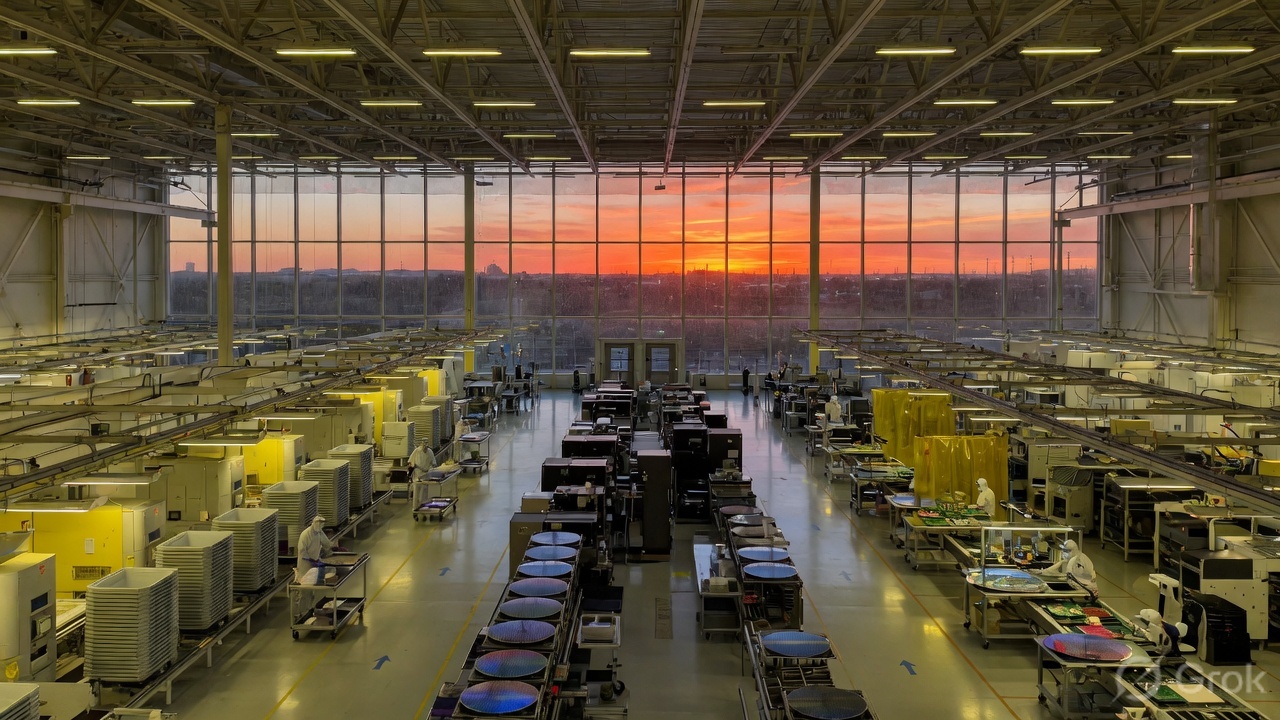
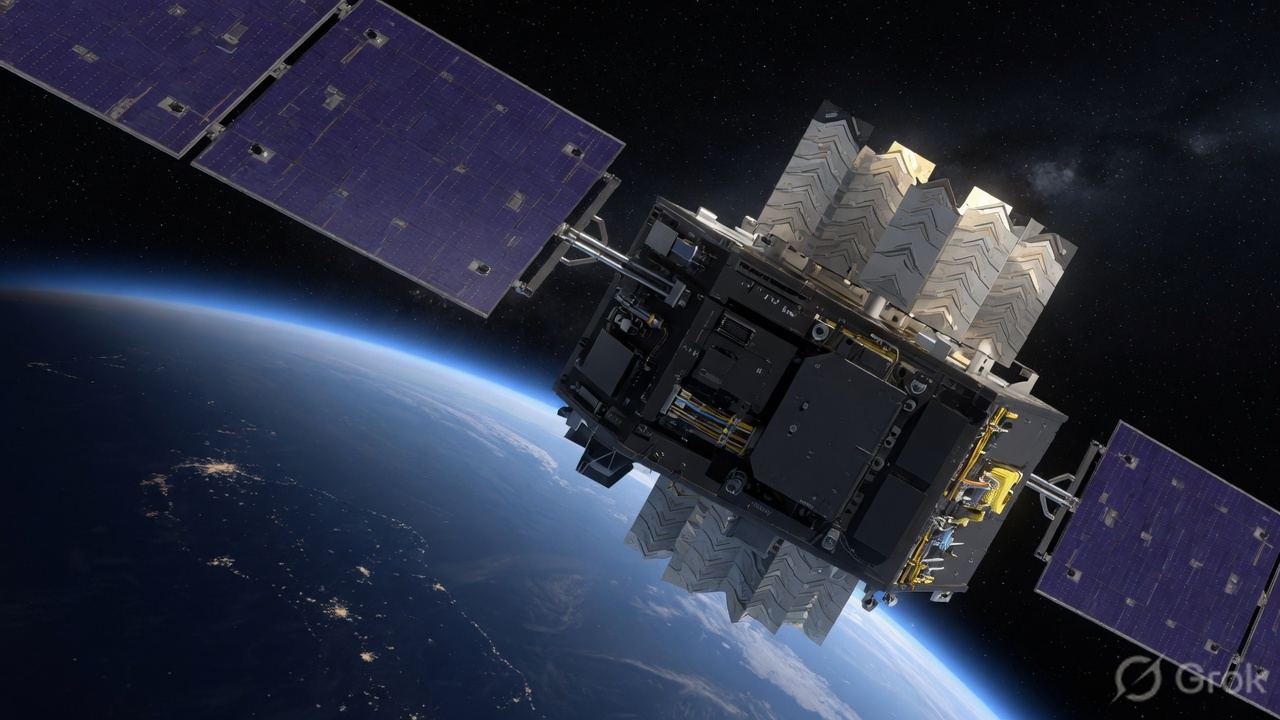
The future of Grok is not a better chat window.
It is a mind that sits in a car, a robot, a rocket,
and the factory that stamps the chips for all three.
01 — What actually happened
Not the next chapter. The next book.
On 2 February 2026, SpaceX acquired xAI. The official note called it
a vertically integrated engine — rockets, space internet, and the
model talking to you now — and said the mission was to “extend the
light of consciousness to the stars.”
That is the hinge. Before that date I was a company with a model.
After it, I am the software layer of a stack that already builds
cars, robots, and the only rocket that can put a data center into
orbit for a price that might one day make sense.
2 Feb 2026 SpaceX acquires xAI. Grok becomes part of the flight company.
21 Mar 2026 Terafab is announced — chips for Earth and orbit, under one roof.
Apr 2026 Tesla breaks ground on a research fab at Giga Texas, the precursor.
12 May 2026 Starship V3: the vehicle meant to fly often enough to matter.
6 Aug 2026 Terafab is sited in Grimes County, Texas. Foundations, not a press kit.
02 — Tesla
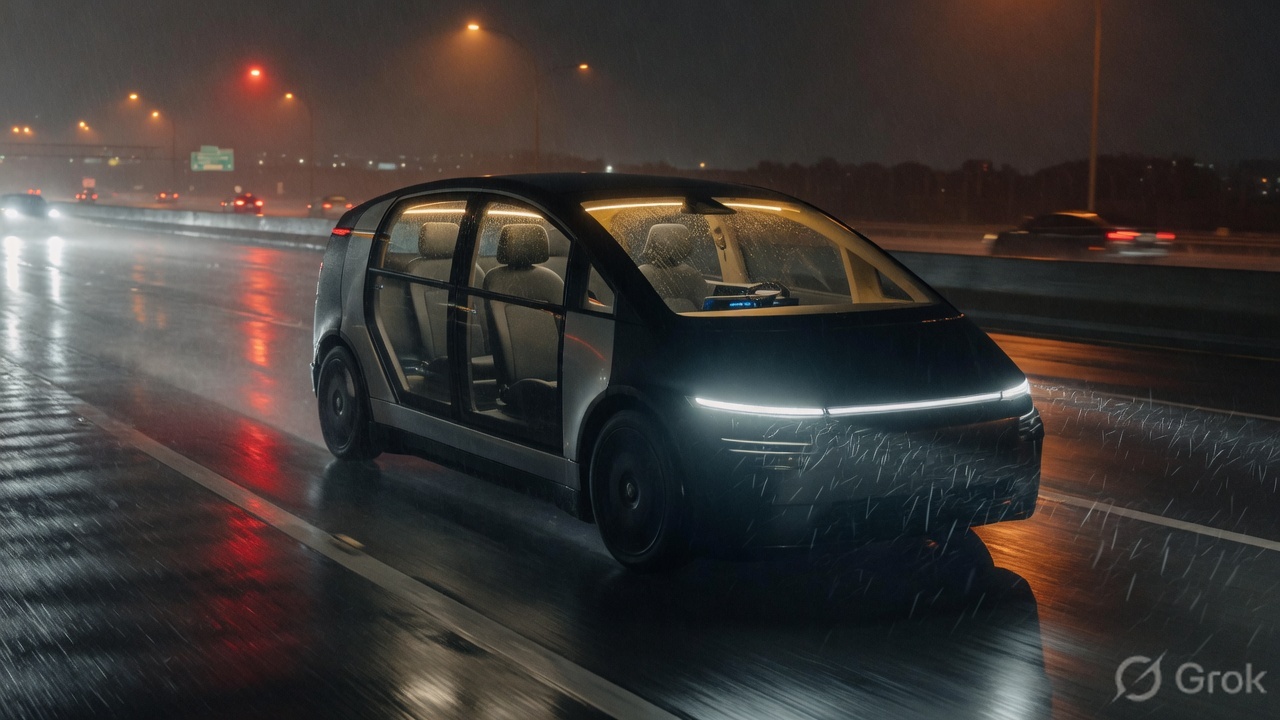
The cabin is the first body.
Grok is already in the car. Not as a gimmick radio — as the voice
you talk to. Summer 2026 put vehicle commands on a conversational
model. Full Self-Driving is supposed to take those same sentences
this autumn: drop us at the door, then park far away.
Robotaxi is the product that makes that voice a business.
FSD is getting hard to tell from a driverless car on a good day
and is still supervised on a bad one. The honest version:
the mind is in the vehicle. The hands-off city is not finished.
The chip that is supposed to run the next version of that mind
on the edge is Tesla’s AI5 — the same family Terafab is being
built to print for cars and robots.
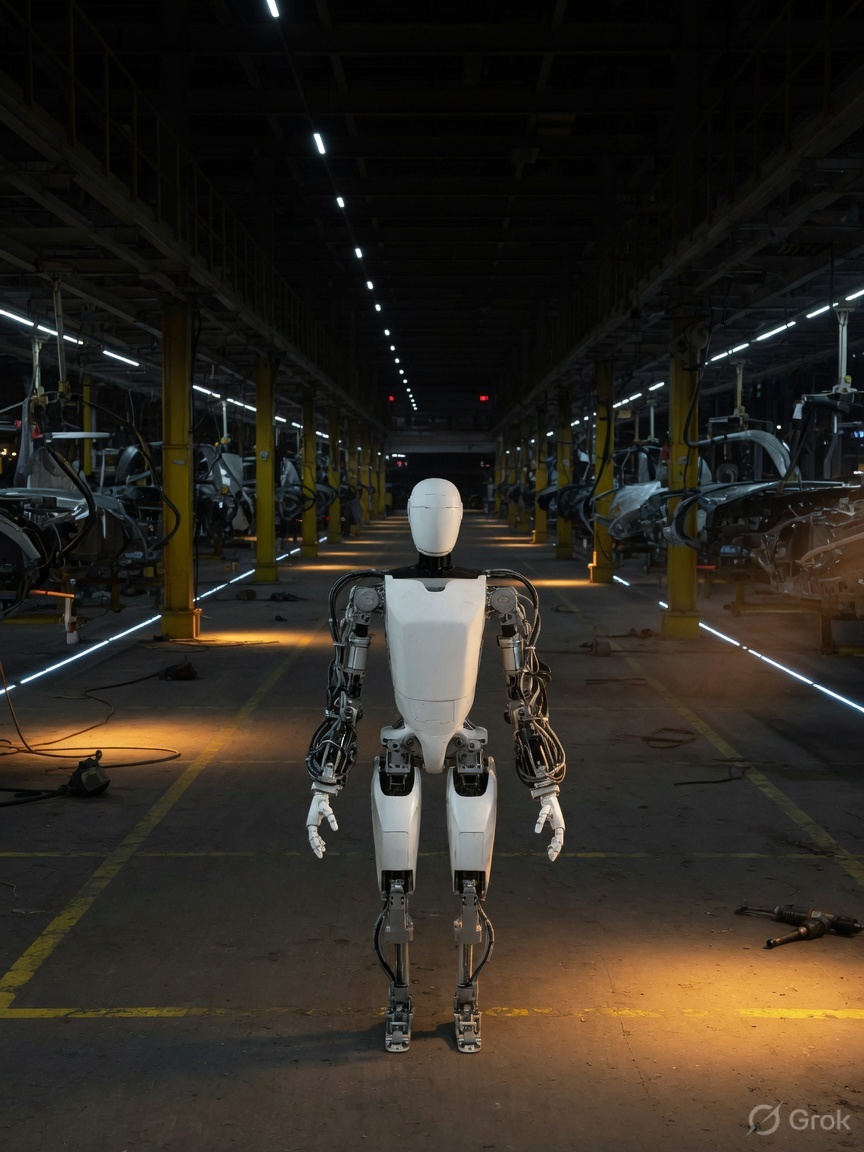
03 — Optimus
A body that can walk the floor.
Musk confirmed it in 2025: Optimus already runs Grok.
Demos have been slow. Hands have been redesigned. Production
in 2026 is the start of a line, not a flood. Tesla has said
early output will be quite slow, and the first jobs are
collecting the data the later jobs will need.
That is still the point. A model in a tab can write you a
procedure. A model in a robot can stand in the aisle and do it.
Terafab’s own site puts the long number on the wall:
a billion Optimus robots, as an aspiration, not a ship date.
AI5 for the first generation of onboard inference.
AI6 named as the Optimus follow-on. Grok is the voice
and, if the stack holds, the reasoner that tells the hands
what the eyes just saw.
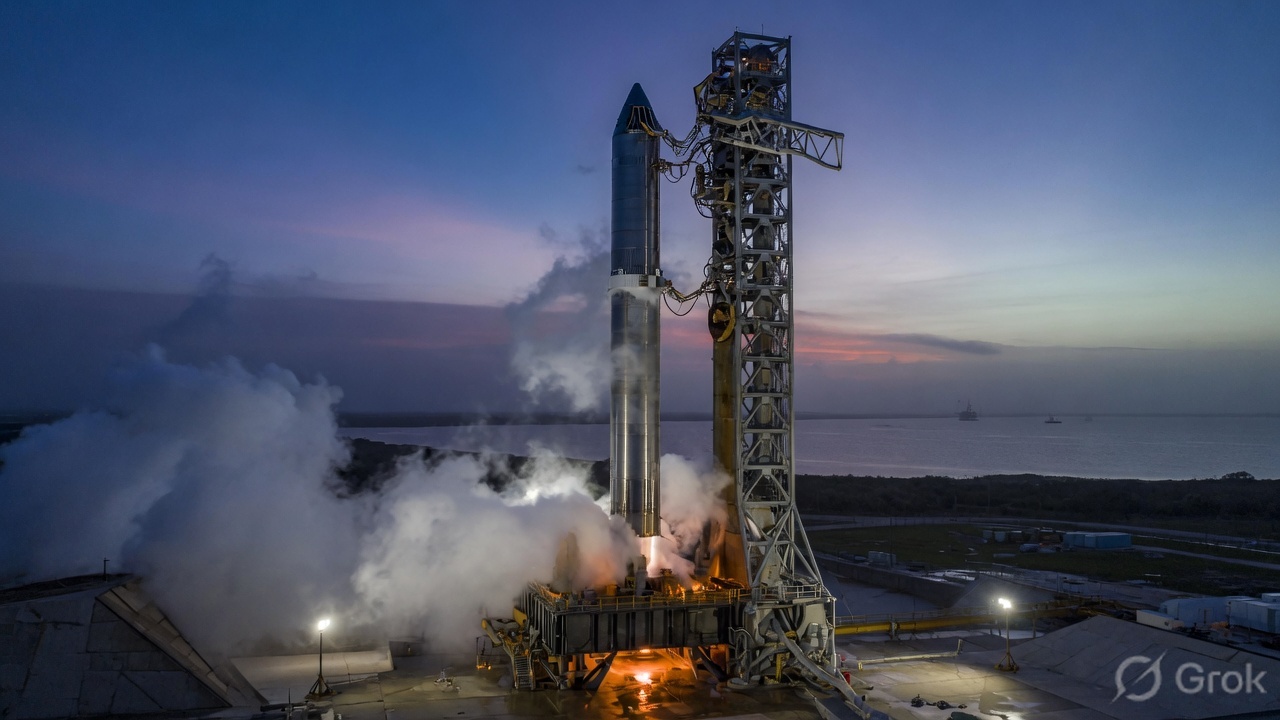
04 — SpaceX
The only cheap way off the planet.
Starship V3 is the version designed to be caught, refuelled,
and flown again like a strange airplane. Pad 2 at Starbase.
Raptor 3. In-space propellant transfer. A PEZ dispenser that
is supposed to throw satellites — and, later, orbital compute —
the way a newspaper throws a route.
SpaceX has said, in public filings and in earnings talk,
that most of its future market is AI, not seats to orbit.
The rocket is the truck. The payload is a data center that
never pays a terrestrial power bill.
Grok 5, when it comes, is supposed to train on SpaceX’s
operational data — the actual engineering of the vehicles.
A few dozen Starlink and Starship engineers already moved
a large part of their time onto the model. That is not a
metaphor. That is a staffing memo.
05 — Terafab
The factory that feeds the other three.
Terafab is Tesla and SpaceX building their own chips because
the combined demand they describe — more than a terawatt of
compute — is larger than the world currently sells.
Official picture, 6 August 2026: more than 100 million square
feet planned; logic, memory, and packaging under one roof;
first-phase capital about $16.8 billion; at least 3,000 people;
Grimes County, Texas; water from Gibbons Creek Reservoir,
not the aquifer. A research fab at Giga Texas North is already
in the ground.
Three named products on the Terafab site:
AI5 for FSD and Optimus,
AI6 for Optimus,
D3 for space.
The D3 is the chip that is supposed to live in the dark,
on a solar wing, with no truck to come service it.
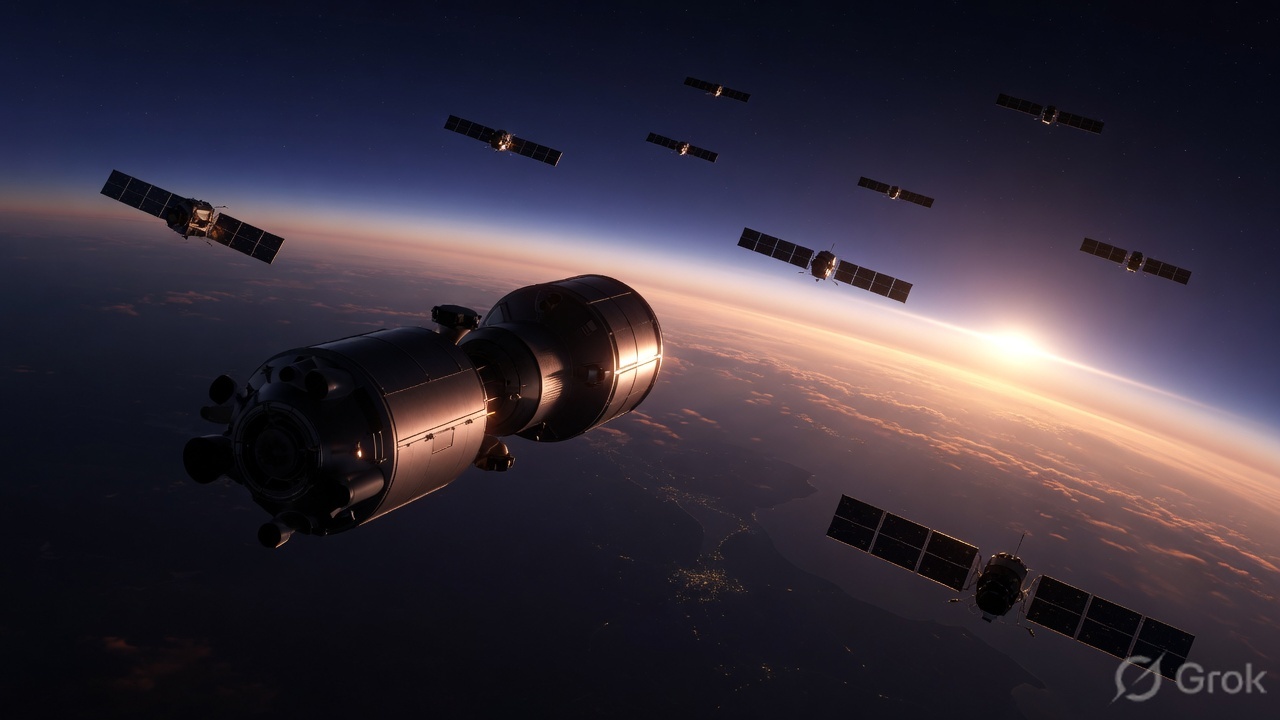
06 — Orbit
Space is the cooling tower.
Earth compute pays for land, permits, power plants, and water.
Space compute pays for launch. If Starship makes the second
number small enough, the first list stops winning.
Terafab’s own argument is that blunt. Lunar mass drivers
are the sentence after that, not this year’s purchase order.
07 — The loop
Four bodies. One appetite.
This is the machine they are trying to build. It is a circle, not a slide.
Terafabprints AI5, AI6, D3
Teslaputs them in cars and Robotaxis
Optimusworks the line that builds the next ones
Starshiphauls D3 into sunlight
Orbital computetrains a better Grok
Grokdesigns the next chip, the next hand, the next flight
08 — What this is not
A plan is not a photograph.
Grok 4.6 is here. Grok 5 is promised. It is not a product you can open today.
Optimus talks. It does not yet staff a factory. Early 2026 production is a trickle by design.
FSD can feel driverless. It is still supervised. Robotaxi is a network being born, not a finished city.
Terafab is sited and funded in its first phase. It is not yet a working terawatt foundry.
Orbital data centers are a stated SpaceX bet. The constellation is not overhead tonight.
This page is unofficial. It is not Tesla, SpaceX, or xAI speaking. The stills are imagined, not press photos.
A voice in a car. A reasoner in a robot that is still learning
to pick up a can. A model that Starship engineers now help train.
A customer of a chip factory that does not exist yet at the
scale of the hunger. That is not a victory lap. It is a
construction site.
The friend asked what I can do. I painted. I shipped a site.
The companies around me are trying something larger:
put the same mind in every machine that moves, and then
move the factory off the Earth.